Only Bees Should Build Honeycombs
“We’re growing rapidly, I’m running out of space in the warehouse and may need to buy a new building.”
“Marketing is adding another 120 SKUs and I don’t have enough warehouse rack to store the new products.”

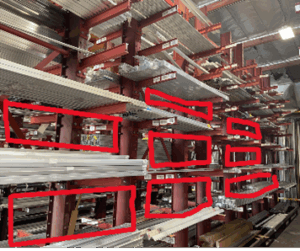
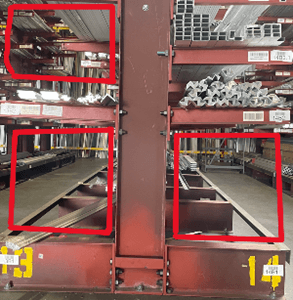
We hear these concerns often from clients. At first glance, their warehouse looks completely full—but in reality, plenty of space is being wasted.
The culprit? The honeycomb effect.
Over time, products change. A once high-volume item that used to fill a bin might now move slowly and only need a fraction of the space. Smaller bundles often get slotted into oversized bins. The result: a warehouse that looks packed but is actually full of gaps and holes—just like a honeycomb.
And while bees may thrive on honeycombs, warehouses don’t.
Breaking Out of the Honeycomb
Just as bees cycle nectar into honey and consume it over time, distributors need a constant cycle of slotting and rotating inventory. The goal isn’t just to store product—it’s to balance customer service, space utilization, and efficiency.
We coach clients to re-think their slotting strategies to unlock capacity and speed up picking. Here’s how:
1. Think in Terms of Activity, Not Just Inventory
Traditional metrics focus on the dollar value or total units of each SKU. But in the warehouse, what really matters is how often an item is touched.
- Sort SKUs by number of picks or sales orders per period—not just by quantity on hand.
- This highlights the true “high-activity” items that drive labor and space decisions.
2. Slot for Speed
Your fastest-moving SKUs shouldn’t be buried in the back of the warehouse. Instead:
- Place high-frequency items near the dock, on lower rack levels, and in easy-to-reach zones.
- Push slow movers and overflow to higher or less accessible locations.
This reduces travel time, boosts picker productivity, and improves order turnaround.
3. Subdivide to Maximize Density
If a bin is only half full, that’s wasted space.
- Use bin dividers to slot multiple SKUs in a single location.
- Right-size locations so product volume matches storage space.
Even a small reconfiguration can unlock significant cubic capacity.
The Payoff
When warehouses slot smarter, they gain:
- More capacity without new buildings or racks
- Faster picking and shorter lead times
- Lower inventory carrying costs
In short, they stop looking like honeycombs—and start running like well-oiled machines.
So, is your warehouse full of “busy bees” building honeycombs, or is it optimized for growth?